.svg)

AI project management tools are transforming how organizations plan, execute, and deliver projects in 2026. Businesses are moving beyond traditional spreadsheets and manual processes to adopt AI-powered project management solutions that automate routine tasks, improve collaboration, and provide real-time project insights. These tools help teams overcome common challenges such as resource constraints, reporting inefficiencies, missed deadlines, and limited visibility.
The best AI project management tools in 2026 combine AI-driven planning, workflow automation, predictive forecasting, and intelligent reporting to improve project outcomes. By leveraging AI for project managers, organizations can identify risks earlier, optimize resource allocation, and make faster, data-driven decisions. Many businesses are already experiencing faster project delivery, reduced administrative effort, and improved productivity through AI software for project management.
In this guide, we'll explore the top 6 AI project management tools, their key features and benefits, and how to choose the right platform based on your business goals and ROI expectations.
1 . Why AI Project Management Tools Are Becoming Essential in 2026
As projects become more complex and teams become increasingly distributed, organizations are adopting AI project management tools to improve efficiency, visibility, resource optimization, and decision-making through advanced automation and AI project planning. Businesses leveraging AI in project management are achieving up to 35% higher project visibility, 30% faster decision-making, and 25% higher team productivity while reducing risks and accelerating project delivery.
Managing Growing Project Complexity
-
Managing Multiple Projects Simultaneously
AI helps project managers prioritize tasks, track dependencies, and monitor progress across multiple projects, reducing coordination challenges and improving delivery outcomes. - Remote and Hybrid Workforce Challenges
AI-powered collaboration tools provide real-time updates and centralized communication, helping distributed teams stay aligned regardless of location or time zone. - Cross-Functional Collaboration Needs
Intelligent workflows improve coordination between departments by automating information sharing and reducing communication gaps that often delay projects. - Increasing Stakeholder Expectations
AI-driven insights and dashboards provide stakeholders with real-time project visibility, resulting in up to 35% higher visibility across project portfolios.
The Need for Data-Driven Decisions
- Real-Time Dashboards
AI-powered dashboards provide instant access to project performance metrics, enabling leaders to make informed decisions with greater confidence. - Forecasting Project Outcomes
Predictive analytics helps teams estimate timelines, budgets, and resource requirements more accurately, reducing project uncertainty. - Predicting Resource Shortages
AI identifies capacity gaps before they affect delivery, helping organizations proactively allocate resources and maintain productivity. - Identifying Project Risks Before They Occur
Early risk detection enables project managers to address potential issues quickly, contributing to 30% faster decision-making and better project outcomes.
Increasing Productivity Through Automation
- Eliminating Repetitive Administrative Tasks
AI automates routine activities such as task creation, status tracking, and scheduling, reducing administrative tasks by up to 40%. - Automating Project Updates
Teams spend less time gathering information as AI automatically updates project statuses and progress reports in real time. - Workflow Approvals
Automated approval workflows accelerate decision-making processes and reduce delays caused by manual reviews and follow-ups. - AI-Generated Reports and Summaries
AI creates executive summaries, project reports, and meeting recaps automatically, helping organizations achieve up to 25% higher team productivity while improving reporting accuracy.
2 . Key Features to Look for in the Best AI Project Management Tools
The best AI project management tools leverage automation, predictive analytics, and intelligent workflows to improve planning, resource management, reporting, and team collaboration while reducing manual effort. Organizations adopting these AI-powered capabilities can achieve up to 25% faster task completion, 30% better forecast accuracy, 20% better resource utilization, 60% faster reporting, and 40% less manual work, resulting in higher productivity, stronger project visibility, and greater operational efficiency.
AI Task Management
-
Automatic Task Creation
AI automatically generates tasks from project requirements, emails, meetings, and action items, reducing administrative effort and helping teams complete work faster. -
Smart Prioritization
AI prioritizes work based on deadlines, dependencies, risks, and business impact, ensuring critical tasks receive immediate attention.
-
Dependency Mapping
Intelligent dependency tracking helps teams identify blockers before they affect project timelines and overall project delivery.
-
Intelligent Task Assignment
AI assigns tasks to the most suitable team members based on workload and skills, contributing to up to 25% faster task completion through smarter planning and execution.
Predictive Project Planning
- Timeline Forecasting
AI predicts project completion dates using historical and real-time project data, helping teams set more realistic expectations. - Budget Forecasting
Intelligent forecasting helps identify potential budget overruns before they occur, allowing proactive cost management. - Capacity Planning
AI evaluates team capacity to support realistic project scheduling decisions and avoid resource shortages. - Schedule Optimization
Dynamic scheduling adjusts timelines automatically when priorities or resources change, enabling up to 30% better forecast accuracy for project timelines and budgets.
AI Resource Management
-
Resource Allocation Recommendations
AI recommends optimal resource assignments based on project demands and priorities, improving workforce efficiency. - Team Workload Balancing
Workloads are distributed evenly to prevent employee burnout and reduce project bottlenecks. -
Skill-Based Resource Matching
AI matches tasks with employees based on expertise, availability, and experience to maximize productivity. -
Capacity Forecasting
Predictive insights help organizations anticipate future staffing requirements, contributing to up to 20% better resource utilization across projects and teams.
Intelligent Reporting and Dashboards
- Executive Dashboards
Real-time dashboards provide leadership with instant project performance visibility and actionable insights. - Automated Reporting
AI automatically generates project status reports without manual data collection, significantly reducing reporting effort. - Project Health Indicators
Intelligent scoring highlights project risks, delays, and performance concerns before they escalate. - Performance Tracking
- Teams can monitor KPIs and project progress through continuously updated metrics, enabling up to 60% faster reporting and improved decision-making visibility.
AI Meeting and Documentation Assistance
- Meeting Summaries
AI generates concise summaries that capture key discussions and decisions, reducing the need for manual note-taking. - Action Item Extraction
Important tasks and responsibilities are automatically identified from meetings to improve accountability. - Project Documentation Generation
AI creates project documents, requirements, and status updates with minimal effort, saving valuable time. - Knowledge Management
Information is organized and searchable, making project knowledge easier to access while reducing documentation effort and improving team collaboration.
Workflow Automation
- Automated Approvals
Approval processes are routed automatically to the appropriate stakeholders, accelerating decision-making. - Status Changes
Project statuses update automatically based on task progress and milestones, eliminating repetitive manual updates. - Notification Triggers
AI sends alerts and reminders when actions or deadlines require attention, helping teams stay on track. - Multi-Step Workflow Automation
- Complex business processes can be automated from initiation through completion, resulting in up to 40% less manual work through end-to-end workflow automation.
3 . Best AI Project Management Tools in 2026
The best AI project management tools in 2026 combine artificial intelligence, automation, predictive analytics, and collaboration features to streamline project execution and improve business outcomes. Platforms such as Jira AI, monday.com AI, Asana AI, ClickUp AI, Wrike AI, and Smartsheet AI stand out for their ability to enhance productivity, automate workflows, provide actionable insights, and scale with organizational needs.
Jira
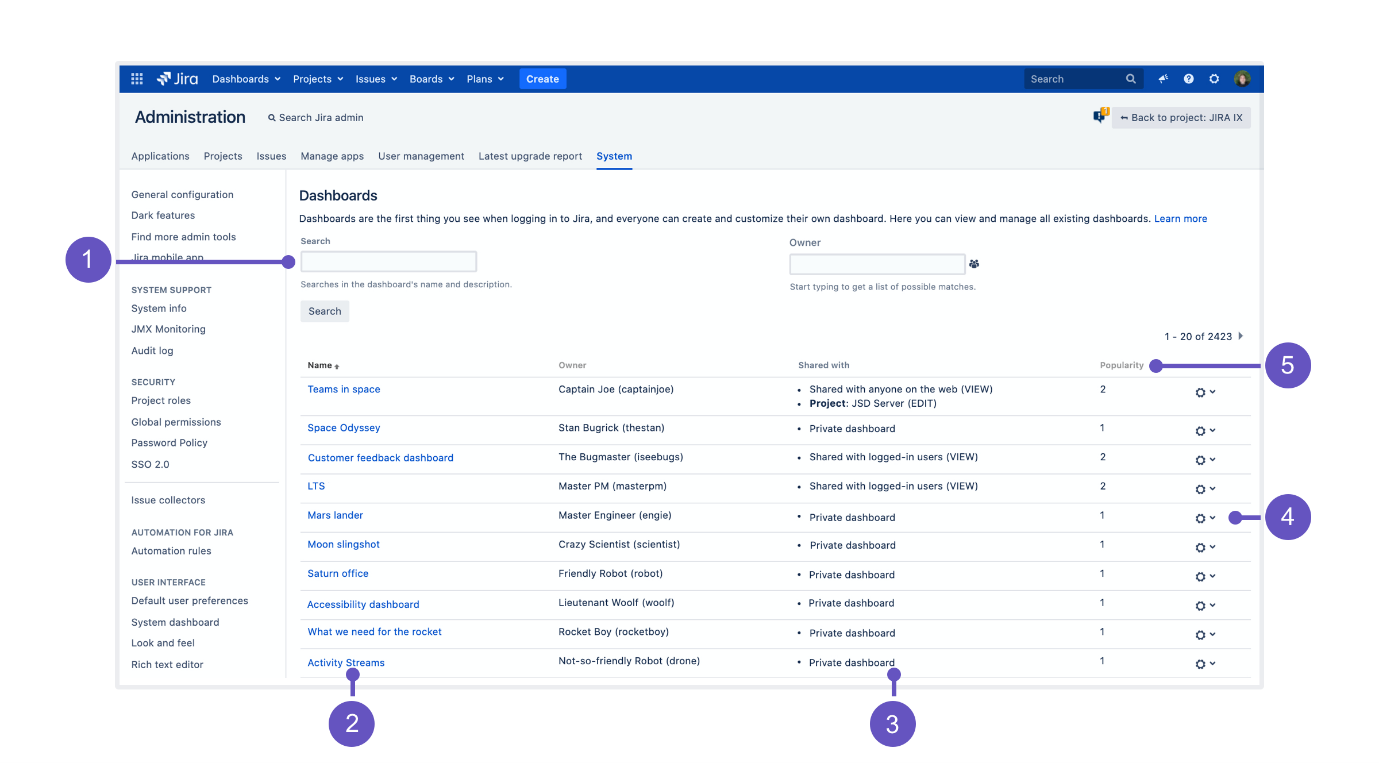
Jira is a leading AI-powered project management platform for Agile, DevOps, and software teams, enabling efficient project tracking, workflow automation, and collaboration. With Jira AI features like backlog prioritization and sprint planning, organizations complete sprint planning 20–35% faster, reduce manual ticket creation by 25–40%, and achieve 15–25% higher productivity.
Key AI Features
- AI-Powered Issue Creation – Generates tasks automatically from requirements and discussions, reducing manual effort by 25–40%.
- Sprint Planning Recommendations – Uses AI to optimize capacity and improve planning speed by 20–35%.
- Backlog Prioritization – Prioritizes tasks based on value, urgency, and dependencies for better focus.
- Automated Summaries – Creates sprint reports and updates, enabling 20–30% faster reporting.
- Risk Prediction – Detects delays and bottlenecks early for proactive action.
Business Benefits
- Reduces backlog management effort through automation
- Improves sprint planning accuracy with AI insights
- Accelerates software delivery through optimized workflows
- Enhances visibility and collaboration, improving team alignment by up to 35%
Is Jira the Right Choice for Your Organization?
Atlassian Jira Agile Project Management is ideal for Agile, DevOps, and enterprise teams that need strong customization, deep integrations, and structured project control. While it has a learning curve, it delivers significant improvements in delivery speed, collaboration, and overall project efficiency.
monday.com
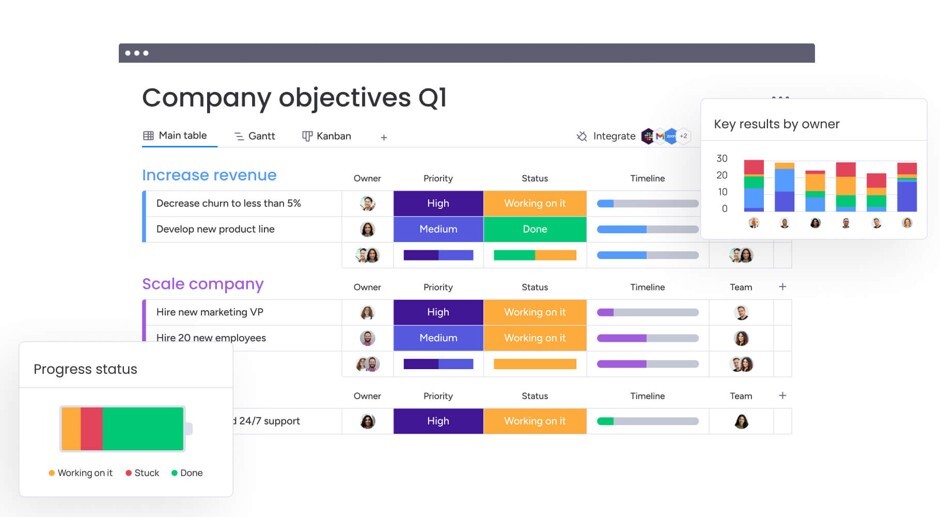
monday.com is a leading AI-powered work management platform that combines project management, collaboration, and workflow automation in a highly visual interface. It is widely used across marketing, operations, HR, sales, and IT teams to streamline execution and improve efficiency. With AI capabilities, organizations achieve 30–50% less manual administration, 25–35% faster workflow setup, and 20–30% higher productivity, enabling faster and more structured project delivery.
Key AI Features
- AI Workflow Generation – Creates workflows from prompts, helping teams build processes 25–35% faster than manual setup.
- Automated Task Creation – Generates tasks and assigns owners automatically from requests and conversations, reducing admin effort.
- AI-Generated Summaries – Provides quick updates on project progress and team activity without manual reporting.
- Formula Builder – Assists in creating formulas and automation rules without technical expertise.
- Workload Recommendations – Suggests workload adjustments based on capacity to improve balance and productivity.
Business Benefits
- Simplifies workflow creation with faster AI-driven setup
- Improves project visibility through real-time dashboards and insights
- Reduces repetitive administrative work by 30–50%
- Enhances cross-functional collaboration across teams and departments
Is monday.com the Right Choice for Your Organization?
monday.com AI is ideal for organizations that need a user-friendly, visual, and flexible AI project management platform. It works especially well for marketing, operations, HR, sales, and business teams that prioritize speed of adoption, collaboration, and workflow automation. While it offers less depth in Agile development compared to Jira, it delivers strong productivity gains and improved visibility across business functions.
Asana
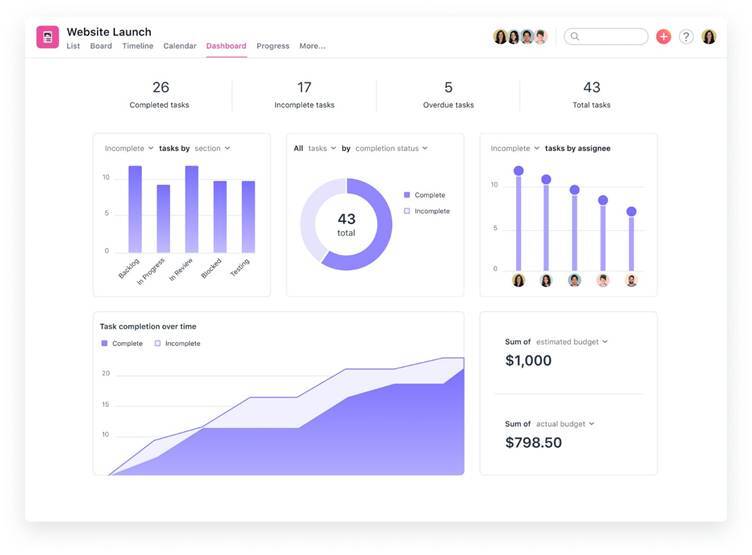
Asana is a widely used AI-powered work management platform designed to streamline project planning, goal tracking, and cross-functional collaboration through a simple and intuitive interface. With AI-driven productivity features, organizations achieve 20–30% faster project planning, 15–25% lower reporting effort, 20–25% better project visibility, and 15–20% higher team productivity, making it effective for managing structured workflows and complex projects.
Key Features
- Project Planning Capabilities – Helps teams create plans, set milestones, manage dependencies, and track progress across multiple views.
- Goal Tracking – Aligns daily tasks with strategic business objectives for better focus and direction.
- AI Productivity Tools – Supports task suggestions, workflow automation, and smart status updates to reduce manual work.
- Collaboration Tools – Enables communication, file sharing, and task-level discussions for smoother teamwork.
Business Benefits
- Speeds up project planning with AI-assisted workflows
- Reduces reporting effort through automated updates
- Improves visibility with real-time dashboards and tracking
- Increases productivity by reducing administrative workload
Is Asana the Right Choice for Your Organization?
Asana is best suited for organizations that prioritize collaboration, clarity, and goal alignment. It is especially effective for marketing teams, agencies, and cross-functional business teams that need a simple yet powerful AI-enabled project management solution balancing usability and productivity.
ClickUp
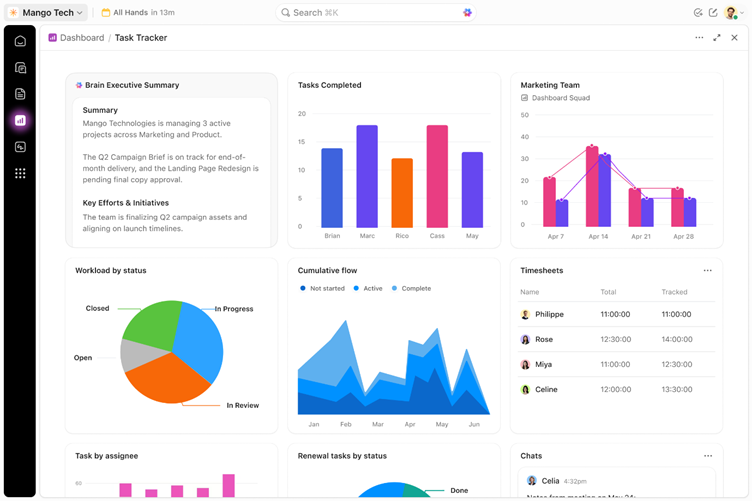
ClickUp is an all-in-one AI-powered productivity and project management platform that combines task management, collaboration, documentation, and workflow automation in a single workspace. With AI capabilities, organizations achieve 40–60% faster documentation, 20–30% fewer manual project updates, 15–25% higher productivity, and 20–35% faster follow-ups, improving overall execution efficiency.
Key Features
- All-in-One Workspace – Combines tasks, docs, goals, dashboards, and communication in one platform, reducing tool fragmentation.
- AI Assistant – Generates content, summarizes meetings, creates tasks, and automates routine work.
- Documentation & Collaboration – Enables real-time editing, chat, comments, and knowledge sharing.
- Customization Flexibility – Highly adaptable for startups and growing businesses with scalable workflows.
Business Benefits
-
Speeds up documentation with AI-generated content and summaries
- Reduces manual project updates through automation
- Improves productivity with centralized work management
- Enhances communication and follow-up efficiency across teams
Is ClickUp the Right Choice for Your Organization?
ClickUp is ideal for startups, SMBs, and fast-growing teams looking for a cost-effective, flexible, and feature-rich AI project management platform. It is especially valuable for organizations aiming to consolidate multiple tools into a single workspace while improving productivity, collaboration, and operational efficiency.
Wrike
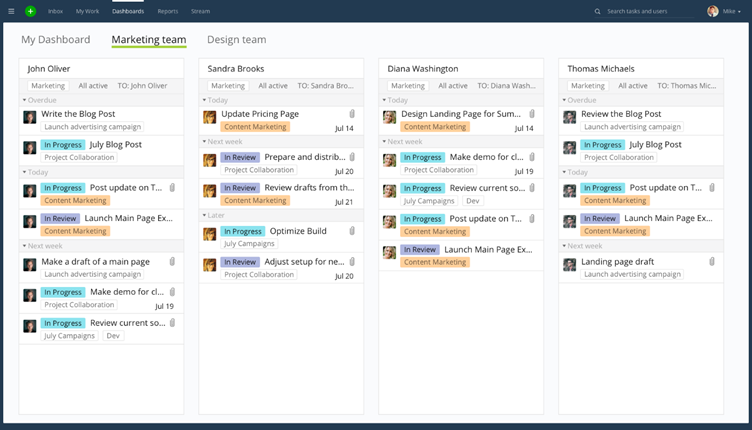
Wrike is an enterprise-grade AI-powered project management platform designed for organizations managing complex projects, portfolios, and cross-functional teams at scale. With predictive analytics, resource planning, and portfolio management capabilities, organizations achieve 20–30% better resource utilization, 25–40% improved forecasting accuracy, 20–30% lower project risk, and 30–50% faster reporting, enabling more efficient and data-driven execution.
Key AI Features
- Predictive Risk Analysis – Identifies potential delays and bottlenecks early using AI and historical project data.
- Resource Forecasting – Predicts resource needs and improves allocation across multiple projects.
- Workload Balancing – Optimizes team workloads to reduce burnout and improve productivity.
- Portfolio Insights – Provides AI-driven visibility into project performance and priorities.
- Automated Reporting – Generates reports and analytics, reducing manual effort by up to 50%.
Business Benefits
-
Improves resource utilization through smarter planning
- Enhances forecasting accuracy with predictive insights
- Reduces project risks through early detection
- Accelerates reporting with real-time automated dashboards
Is Wrike the Right Choice for Your Organization?
Wrike is best suited for enterprises, PMOs, and organizations managing large-scale, complex project portfolios. It delivers strong value in governance, scalability, and predictive analytics, making it ideal for teams that require advanced control and data-driven decision-making across multiple projects.
Smartsheet
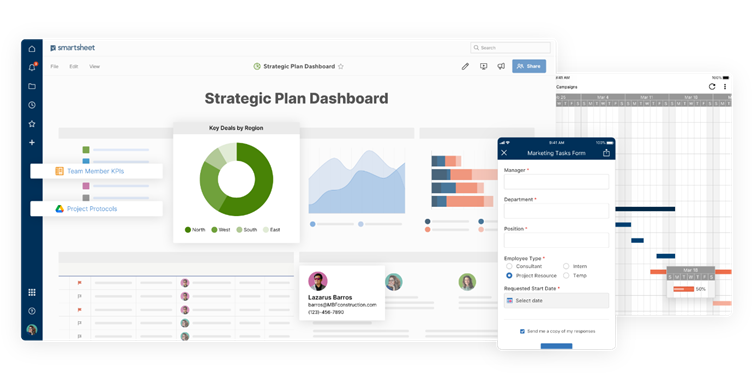 Smartsheet combines the familiarity of spreadsheets with enterprise-grade project and portfolio management capabilities, making it ideal for organizations that need flexibility, scalability, and structured oversight. With advanced planning, forecasting, resource management, and reporting features, businesses achieve 20–35% faster reporting, 15–25% better portfolio visibility, 20–30% improved planning accuracy, and 15–20% fewer resource bottlenecks, improving execution efficiency and decision-making.
Key AI Features
- AI-Powered Forecasting – Predicts timelines, resources, and delivery risks to improve planning accuracy.
- Portfolio Management – Provides executive-level visibility into projects, priorities, and resources.
- Project Health Monitoring – Detects risks and delays early using AI-driven indicators.
- Automated Reporting – Generates dashboards and reports, enabling 20–35% faster reporting.
- Resource Planning – Optimizes workload distribution and reduces bottlenecks across teams.
- Improves portfolio visibility with centralized dashboards
- Enhances planning accuracy using predictive insights
- Reduces resource bottlenecks through better capacity planning
- Supports faster executive decisions with real-time reporting
Is Smartsheet the Right Choice for Your Organization?
Smartsheet is best suited for PMOs, operations teams, and enterprises managing large-scale or transformation projects. It is especially valuable for organizations that prefer spreadsheet-style usability combined with advanced AI forecasting, reporting, and portfolio management, making it a scalable and flexible project management solution.
4 . How AI Improves Every Stage of the Project Lifecycle
AI project lifecycle management is transforming how organizations plan, execute, monitor, and close projects by introducing automation, predictive analytics, and intelligent decision-making throughout the project journey. From AI project planning and resource optimization to risk management and reporting, AI helps teams improve efficiency, reduce manual effort, and make faster, data-driven decisions. Organizations adopting AI across the project lifecycle often achieve up to 40% faster planning, 25% more efficient execution, 30% better project visibility, and 60% faster reporting, helping teams deliver projects with greater consistency and control.
Project Initiation
-
Scope Generation
AI generates project scopes from business requirements, reducing planning effort and improving consistency from the start. - Requirement Gathering
AI analyzes documents, conversations, and historical projects to identify and organize requirements more efficiently. - Stakeholder Identification
Intelligent systems help identify key stakeholders based on project objectives, dependencies, and organizational structures. - Risk Identification
AI detects potential project risks early by analyzing historical project data and known risk patterns.
Project Planning
-
Timeline Creation
AI builds realistic project schedules using historical performance data and project complexity factors.
-
Resource Planning
AI recommends resource allocation strategies based on availability, workload, and project priorities. -
Cost Estimation
Intelligent forecasting models estimate project costs more accurately by leveraging historical spending patterns. -
Dependency Mapping
AI automatically identifies task relationships and dependencies to reduce scheduling conflicts.
Resource Allocation
-
Capacity Management
AI continuously evaluates team availability to prevent overutilization and resource shortages. - Skill Matching
Intelligent recommendations assign tasks based on employee skills, experience, and availability. - Workload Optimization
AI balances workloads across teams to improve productivity and reduce project bottlenecks.
Project Execution
-
Progress Tracking
AI monitors project performance continuously and highlights deviations from planned objectives. - Automated Updates
Project statuses and milestones are updated automatically, reducing administrative workload. - Collaboration Support
AI-powered collaboration tools improve communication and information sharing across project teams.
Monitoring and Control
- KPI Tracking
AI monitors key performance indicators in real time to support faster decision-making. - Risk Monitoring
Intelligent systems detect emerging risks and recommend corrective actions before issues escalate. - Forecasting
Predictive analytics forecast project timelines, budgets, and resource requirements with greater accuracy.
Project Closure
- Project Reporting
AI automatically generates project completion reports, reducing manual reporting effort. - Lessons Learned
Intelligent analysis identifies project successes and improvement opportunities for future initiatives. - Documentation
AI organizes and creates project documentation to support knowledge retention and compliance requirements.
6 . How to Choose the Right AI Project Management Tool
Selecting the right AI project management tool requires more than comparing features and pricing. Organizations should evaluate how well a platform aligns with business objectives, team requirements, security standards, and long-term growth plans. A structured evaluation framework helps stakeholders assess AI capabilities, total cost of ownership, expected ROI, and operational impact before making a decision.
-
Assess Your Team Size
Small teams may benefit from user-friendly platforms with quick deployment, while larger enterprises often require advanced governance, portfolio management, and scalability features.
-
Define Business Objectives
Clearly identifying goals such as improving productivity, reducing project delays, enhancing collaboration, or automating workflows helps narrow down the most suitable solution.
-
Evaluate AI Capabilities
Compare AI-powered features such as task automation, predictive forecasting, reporting, resource planning, and intelligent recommendations to ensure they address key business challenges.
-
Consider Integration Requirements
The ideal platform should integrate seamlessly with existing tools such as CRM systems, collaboration platforms, development environments, and business applications.
-
Review Security and Compliance
Organizations should evaluate data protection, access controls, compliance certifications, and governance capabilities before adopting an AI-powered platform.
-
Analyze Scalability
Choose a solution that can support future growth, increasing project volumes, additional users, and evolving business requirements without requiring major system changes.
-
Compare Pricing and ROI
Beyond licensing costs, organizations should evaluate productivity gains, project completion rates, resource utilization improvements, and potential cost savings to understand total return on investment. Measuring KPIs such as time saved, project delivery speed, cost per project, and resource utilization can help determine long-term business value.
7 . Future Trends Shaping AI Project Management in 2026 and Beyond
AI is rapidly evolving from an assistant that automates tasks to a strategic partner that supports decision-making and project execution. As organizations mature their AI adoption strategies, emerging technologies are expected to transform how projects are planned, managed, and optimized. These innovations will help businesses improve forecasting accuracy, reduce manual coordination, and increase operational agility across the enterprise.
-
AI Agents Managing Project Workflows
AI agents will coordinate tasks, assign work, monitor progress, and automate routine project activities, helping teams significantly reduce manual coordination efforts.
-
Autonomous Project Planning
Advanced AI systems will automatically generate project schedules, resource plans, and dependency maps, enabling organizations to complete planning activities much faster.
-
Predictive Portfolio Management
AI-driven portfolio analysis will improve investment decisions by forecasting project performance, resource requirements, and business outcomes with greater accuracy.
-
Conversational Project Management
Natural language interfaces will allow users to create tasks, generate reports, and retrieve project insights through simple conversations with AI assistants.
-
AI-Generated Executive Reporting
Intelligent reporting tools will automatically produce leadership dashboards, performance summaries, and strategic recommendations, providing executives with faster access to actionable insights.
-
Hyper automation Across Business Operations
Organizations will increasingly connect project management with enterprise-wide automation initiatives, creating integrated workflows across departments and systems while reducing manual intervention.
8 . Why Jira and monday.com Are Leading AI Project Management Platforms
Jira and monday.com continue to lead the AI project management market because they combine powerful automation, intelligent workflows, scalability, and extensive integration ecosystems. Both platforms are investing heavily in AI innovation, enabling organizations to improve productivity, streamline operations, and support enterprise-scale project management. Their ability to serve different business needs makes them among the most widely adopted AI-powered work management solutions.
AI Features in Jira
- Atlassian Intelligence enhances project management through AI-powered issue creation, sprint planning recommendations, intelligent backlog prioritization, and development workflow automation.
- Jira's AI capabilities help Agile and software development teams improve planning accuracy, accelerate delivery cycles, and increase Agile productivity by enabling smarter project execution.
AI Features in monday.com
- monday AI provides workflow generation, automated project updates, task recommendations, and business process automation capabilities. It also includes advanced AI capabilities such as monday Sidekick, monday Vibe, and monday AI Agents that help teams interact with data, automate decision-making, and streamline complex workflows more efficiently.
- Its AI-powered automation features help organizations reduce manual work, improve collaboration, and streamline operational processes across departments.
Which Platform Is Right for Your Organization?
- Organizations focused on Agile development, DevOps, and software delivery often prefer Jira because of its advanced sprint planning, backlog management, and development-focused ecosystem.
- Teams managing operations, marketing, HR, finance, and cross-functional business processes may find monday.com more intuitive due to its flexible workflows and automation capabilities.
- Jira typically delivers stronger Agile productivity improvements, while Monday.com often provides greater workflow automation and collaboration benefits for non-technical teams.
- Both platforms offer enterprise scalability, extensive integrations, and strong AI roadmaps, making the final choice dependent on team structure, use cases, industry requirements, and long-term business goals.
9 . Need Help Choosing the Right AI Project Management Platform?
Selecting the right AI project management tool is only the first step. Successful implementation requires strategic planning, workflow design, integrations, user adoption, governance, and ongoing optimization to maximize business value. Whether you're evaluating Jira, Monday.com, or another AI-powered platform, working with an experienced implementation partner can help reduce deployment risks and accelerate ROI.
Why Partner with Empyra?
Empyra helps organizations evaluate, implement, and optimize modern project management platforms that align with business goals and operational requirements.
Our AI Project Management Consulting Services
- Platform Assessment and Selection
Evaluate Jira, Monday.com, and other AI-powered project management solutions based on your business requirements. - Implementation and Configuration
Configure workflows, permissions, automation, dashboards, and reporting to support your processes. - AI Workflow Automation
Design intelligent workflows that reduce manual effort and improve operational efficiency. - Migration and Integration Services
Connect project management platforms with CRM, ERP, DevOps, collaboration, and business systems. - User Training and Adoption
Help teams maximize platform adoption through training, governance, and best practices. - Ongoing Managed Services
Continuously optimize workflows, reporting, automation, and AI capabilities as business needs evolve.
Conclusion
AI is transforming project management from a reactive approach into a proactive, data-driven discipline. In this guide, we explored how AI capabilities like intelligent task management, predictive planning, resource optimization, workflow automation, and advanced reporting improve efficiency and project outcomes. Tools such as Jira, Monday.com, Asana, ClickUp, Wrike, and Smartsheet offer unique strengths, so selection should align with business goals, team structure, scalability needs, and ROI expectations.
As project complexity increases, AI is no longer optional but a necessity. Organizations implementing AI project management tools can achieve 20–35% faster delivery, 15–30% higher productivity, 20–40% better forecasting accuracy, and 30–50% less administrative effort, making it a key investment in 2026.
To explore the right solution for your organization, book a free consultation with our experts to get tailored recommendations based on your business needs.
.png?width=364&height=116&name=sales%20radar%20ai%20logo%202026%20%20(280%20x%2084%20px).png)






.svg)