.svg)

Modern project teams spend more time coordinating work than actually completing it. Between constant meetings, delayed approvals, manual reporting, and repetitive administrative tasks, project management has become increasingly complex for growing organizations. Teams often struggle with visibility across projects, collaboration gaps, and inefficient workflows that slow down delivery timelines. This is where AI for project management is changing how teams operate.
Instead of relying entirely on manual coordination, organizations are now using AI-powered systems to automate repetitive work, improve decision-making, and streamline project execution. From intelligent task prioritization to predictive analytics and automated reporting, AI is helping teams improve productivity while reducing operational overhead.
Platforms like Jira are already integrating advanced AI capabilities through Rovo AI to help organizations automate workflows, improve collaboration, and gain better project visibility. According to Atlassian Jira AI Features, AI-powered features can generate summaries, automate project actions, and provide contextual recommendations directly inside Jira workflows.
1. What Is AI for Project Management?
AI for project management refers to the use of artificial intelligence technologies such as machine learning, predictive analytics, and generative AI to improve how projects are planned, executed, monitored, and delivered. Unlike traditional project management systems that rely heavily on manual coordination, AI-powered platforms can analyze data, identify risks, automate repetitive tasks, and provide intelligent recommendations in real time.
Modern project management AI systems help teams improve operational efficiency by reducing administrative work and increasing visibility across projects. Instead of spending hours manually updating tasks or preparing reports, project managers can focus more on strategy, collaboration, and decision-making.
| Traditional Project Management | AI-Powered Project Management |
| Manual project scheduling and planning |
AI-driven project forecasting and intelligent scheduling |
| Reactive issue management | Predictive risk detection with machine learning insights |
| Static dashboards and delayed reporting |
Real-time AI analytics with live performance monitoring |
| Manual task updates and workflow tracking | Automated workflow orchestration and smart task automation |
| Resource allocation based on assumptions |
AI-powered resource optimization and capacity planning |
| Human-based effort estimation | Predictive estimation using historical and real-time project data |
AI capabilities inside Jira powered by Rovo AI can help teams create automation rules using natural language prompts, generate issue summaries, and organize project workflows faster.
2. Why Businesses Are Using AI for Project Management
Businesses are increasingly adopting AI for project management because traditional workflows can no longer keep up with modern operational demands. Teams now manage remote collaboration, multiple tools, growing workloads, and complex cross-functional projects simultaneously. This often leads to project delays, communication silos, and reporting inefficiencies.
AI helps organizations reduce operational complexity by automating repetitive coordination tasks and improving decision-making through intelligent insights. Instead of reacting to problems after they occur, teams can proactively identify risks and optimize workflows in real time.
Common Project Challenges How AI Helps
- Manual updates
- Automated reporting
- Delayed communication
- AI-generated summaries
- Real-time project insights
AI-powered capabilities in Jira can summarize sprint progress, identify blockers, and automate repetitive workflow actions across teams.
3. Key Benefits of AI for Project Management for Modern Enterprise Teams
AI for project management platforms are helping organizations improve operational efficiency through intelligent automation and predictive workflow management by reducing manual coordination work and increasing project visibility. Daily AI usage has doubled in the past year, and the 2025 Atlassian AI Collaboration Index found workers believe AI makes them 33% more productive. AI can help address the day-to-day challenges and responsibilities faced by project managers and operational teams across modern business environments.
Instead of relying heavily on spreadsheets, manual reporting, and repetitive workflows, teams can use AI to automate routine tasks and improve decision-making across projects. Modern AI systems also help project managers focus more on strategic execution instead of administrative work. This improves collaboration, reduces delays, and increases overall productivity across teams.
Smarter Project Planning
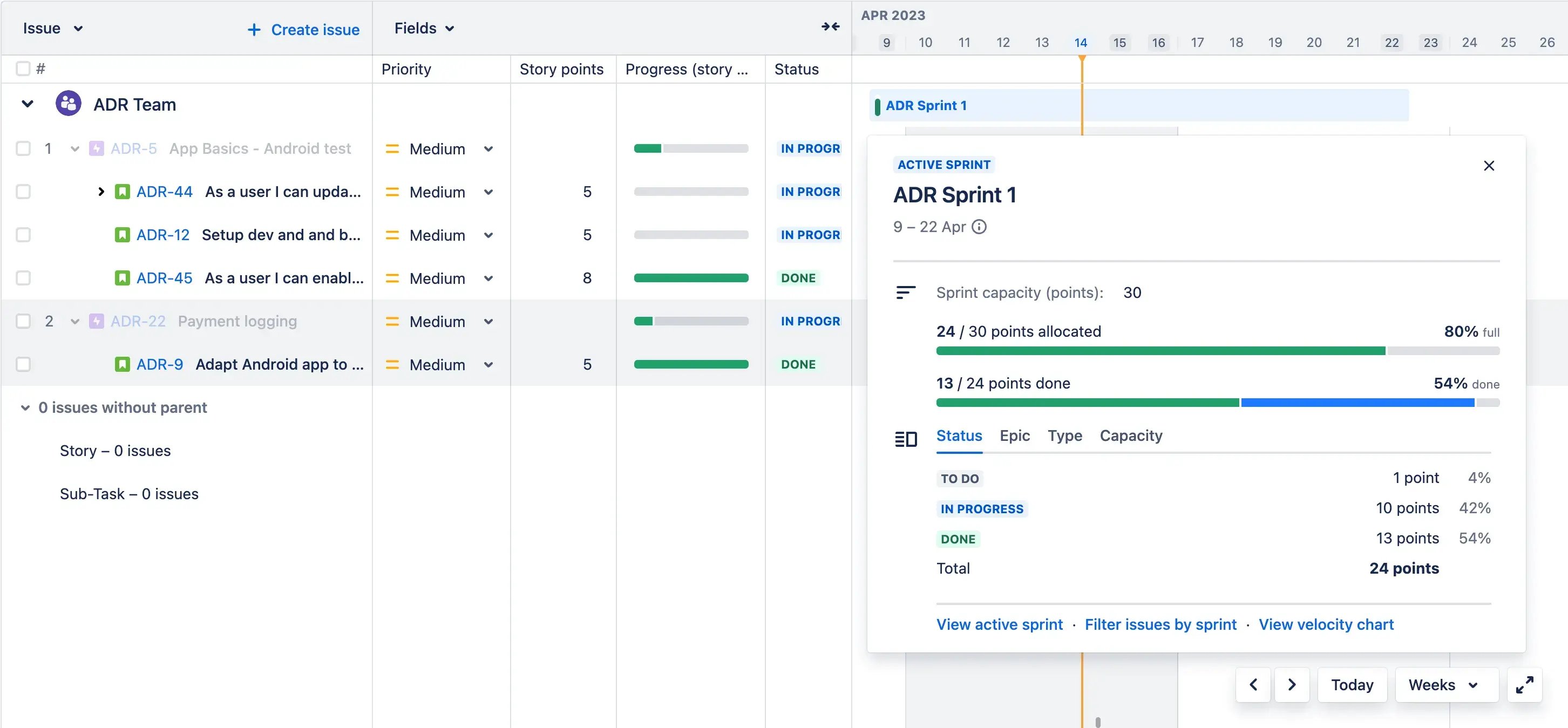
AI helps organizations improve project planning by analyzing historical data, estimating timelines, identifying dependencies, and forecasting resource requirements. Instead of relying entirely on manual assumptions, project teams can use AI-generated insights to create more accurate and scalable project plans.
AI for project management improves planning accuracy by using predictive analytics and intelligent forecasting.
Key Advantages
-
Timeline forecasting — AI can estimate project completion timelines based on historical delivery patterns and team capacity.
- Dependency analysis — AI identifies task dependencies and workflow bottlenecks that may affect project execution.
- Resource estimation — Teams can optimize workload distribution using AI-driven capacity forecasting.
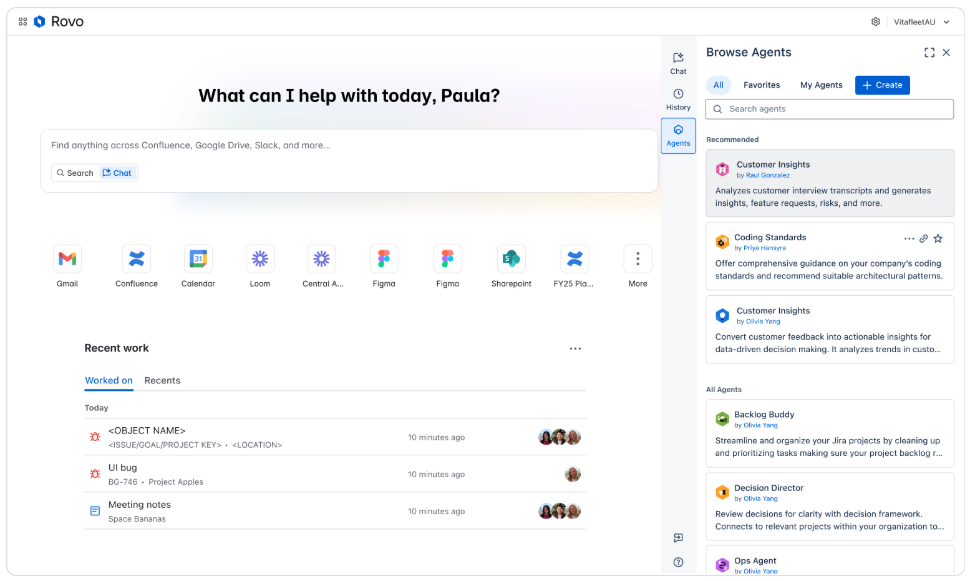
- Project structuring — Rovo AI can help generate work items and organize Jira workflows automatically.
Automated Task Management
One of the biggest benefits of AI for project management is workflow automation. Teams no longer need to spend hours manually assigning tasks, updating statuses, or tracking repetitive activities across multiple systems.
Modern AI for project management tools automate repetitive operational workflows across teams. This allows project teams to focus more on execution and collaboration.
Key Advantages
-
Automatic task assignment — AI can assign tasks based on workload, priorities, and team availability.
- Workflow automation — Repetitive actions such as approvals, notifications, and ticket routing can be automated.
- Smart reminders — AI-generated alerts help teams stay aligned with deadlines and milestones.
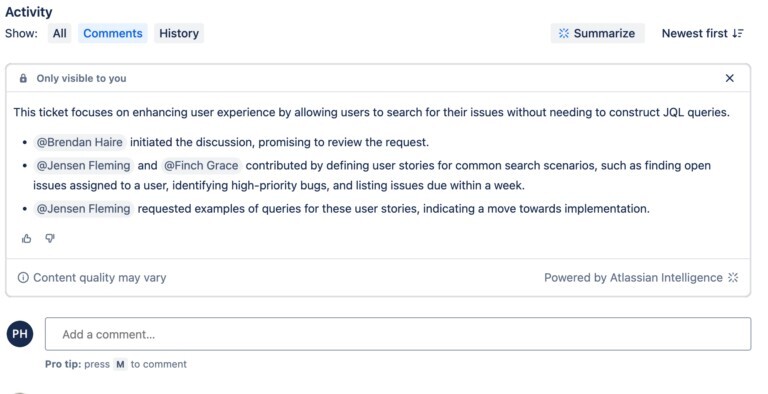
- Natural language automation — Rovo AI enables Jira users to create automation rules using conversational prompts.
Better Team Collaboration
Modern project environments often involve distributed teams working across multiple tools and communication channels. AI improves collaboration by connecting project information, conversations, and documentation into a unified workflow experience.
AI for project management also improves collaboration visibility across distributed teams.
Key Advantages
-
AI-generated meeting summaries — Teams can quickly review important discussions and action items.
- Shared project visibility — AI improves transparency across tasks, workflows, and project updates.
- Intelligent search capabilities — Teams can locate relevant information faster across systems.
- Cross-functional coordination — AI helps align communication between departments and project stakeholders.
Predictive Risk Management
Traditional project management often identifies problems only after they affect delivery timelines. AI-powered systems improve risk management by proactively identifying delays, bottlenecks, and resource conflicts before they escalate.
Predictive analytics help project managers make faster decisions while improving operational visibility across complex workflows.
Key Advantages
-
Delay prediction — AI can identify project risks that may impact delivery schedules.
- Bottleneck detection — Teams gain visibility into workflow inefficiencies before they become major issues.
- Workload balancing — AI helps distribute work more efficiently across teams.
- Risk forecasting — Predictive insights improve planning accuracy and operational decision-making.
Faster Reporting and Insights
Project management AI helps teams reduce time spent preparing reports, updating dashboards, and communicating project progress to stakeholders. AI-powered reporting automates much of this process, reducing administrative overhead while improving visibility.
Real-time analytics also help organizations make faster operational decisions using continuously updated project data.
Key Advantages
-
Automated status reports — AI can generate project summaries and progress updates automatically.
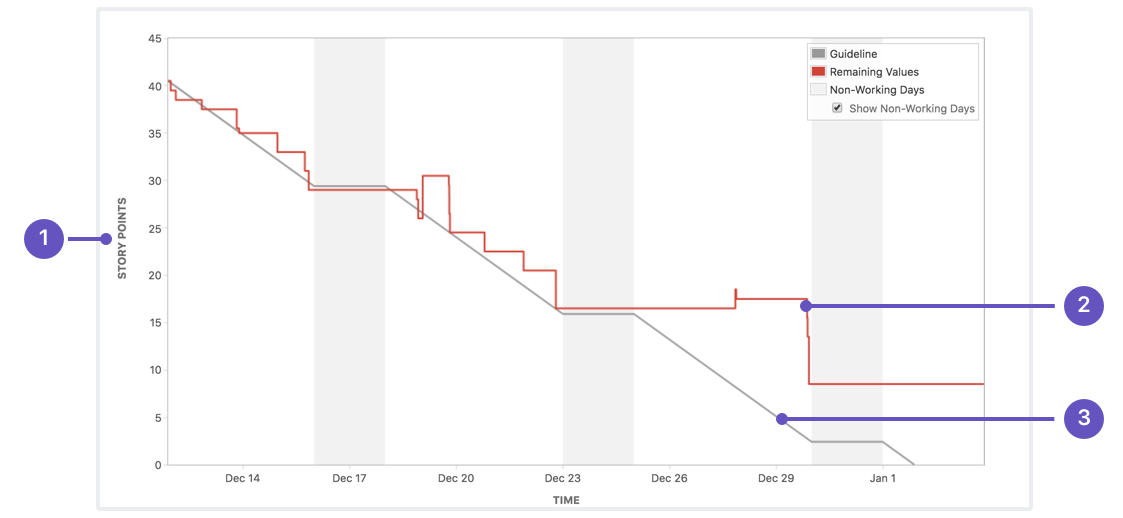
- Real-time dashboards — Teams gain continuous visibility into project performance and workflow metrics.
- Executive reporting — AI simplifies stakeholder communication with intelligent reporting insights.
- Sprint analytics — AI-powered systems help Agile teams analyze delivery trends and team productivity.
4. Real-World Use Cases of AI for Project Management
Organizations across industries are adopting AI-powered workflows to improve collaboration, automate operational tasks, and increase project visibility. AI is no longer limited to task automation — it is becoming an important decision-support system for modern project teams.
Different teams use AI in different ways depending on workflow complexity, operational requirements, and collaboration needs.
AI in Agile Project Management
Agile teams use project management AI to improve sprint planning, backlog prioritization, and workflow coordination. AI-powered insights help teams manage changing priorities while improving sprint visibility and delivery forecasting.
Jira already provides AI-assisted workflow capabilities, AI for project management helps Agile teams automate repetitive project coordination tasks.
AI for Software Development Teams
Development teams often manage large volumes of tickets, bugs, feature requests, and deployment workflows simultaneously. AI helps reduce operational complexity by automating issue tracking and improving workflow visibility. Rovo AI can help convert conversations into actionable Jira work items for development teams.
AI for Marketing Project Management
Marketing teams use AI to manage campaign workflows, content approvals, project tracking, and cross-functional collaboration. AI-powered coordination improves visibility between content, design, and operations teams.
AI in Enterprise Project Management
Large enterprises use AI for project management to improve operational scalability and governance. Predictive analytics help leadership teams manage complex project environments more effectively.
5. Choosing the Right AI Tool for Project Management
Choosing the right project management AI platform depends on workflow requirements, team size, automation needs, governance capabilities, and scalability goals. Organizations should focus on selecting tools that improve operational efficiency while supporting long-term collaboration and governance requirements.
AI project management tools should not only automate workflows but also improve visibility, reporting, and decision-making across teams.
| Evaluation Criteria | Why It Matters |
| AI automation | Reduces repetitive work |
| Workflow integrations | Improves collaboration |
| Scalability | Supports enterprise growth |
| Reporting capabilities | Improves visibility |
| Governance & security | Protects business data |
6 . How Jira and Rovo AI Improve Project Management Workflows
Organizations using Jira are increasingly adopting Rovo AI as a project management AI solution to simplify project coordination, automate workflows, and improve operational visibility across teams. Instead of manually managing updates, tracking dependencies, and preparing reports, project teams can use AI-powered capabilities inside Jira to streamline daily project management activities.
Rovo AI helps teams work more efficiently by connecting project data, conversations, documentation, and workflows into a centralized operational environment. This improves collaboration, reduces repetitive administrative work, and helps teams make faster decisions.
Key Benefits of Jira and Rovo AI
-
AI-powered workflow automation — Automate repetitive project tasks, approvals, notifications, and workflow actions directly inside Jira.
- Natural language automation — Teams can create automation rules using conversational prompts instead of complex configurations.
- AI-generated summaries — Rovo AI can summarize sprint updates, issue discussions, and project progress automatically.
- Centralized project visibility — Jira improves collaboration by providing shared visibility across projects, tasks, and workflows.
- Intelligent search capabilities — Teams can quickly locate relevant project information across Jira environments.
7. How to Implement AI for Project Management Successfully
Successful project management AI adoption starts with identifying operational bottlenecks instead of trying to automate everything at once. Organizations should focus on improving repetitive workflows first before implementing advanced AI-driven project coordination systems.
Teams also need proper governance, workflow strategy, and adoption planning to maximize long-term value from AI-powered project management.
Step 1 — Identify repetitive workflows
Focus on operational tasks such as:
-
Status reporting
-
Approvals
-
Task assignment
- Workflow routing
Step 2 — Choose AI-compatible tools
Select platforms that support:
-
workflow automation
- AI reporting
- collaboration integrations
- scalability
Step 3 — Start with workflow automation first
Begin with simple automation use cases before expanding into predictive AI workflows.
Step 4 — Train teams properly
Ensure employees understand:
-
workflow changes
- AI capabilities
- governance processes
- operational best practices
Step 5 — Monitor AI outputs and governance
Human oversight remains essential for validating AI-generated outputs and maintaining workflow accuracy.
8. Challenges and Risks of AI for Project Management
Project management AI improves automation, forecasting, and collaboration, but organizations still face operational and governance challenges during implementation. Businesses adopting AI tools like Jira and Rovo AI must balance automation with security, accuracy, scalability, and human oversight to ensure reliable project execution.
-
Data Privacy and Security Risks
AI systems process sensitive project and organizational data, creating security and compliance concerns. Teams must implement strong access controls, governance policies, and permission management.
- Inaccurate AI Recommendations
AI-generated insights depend heavily on clean and structured project data. Poor-quality or outdated data can lead to incorrect forecasting, prioritization, and workflow recommendations. - Over-Automation Challenges
Excessive automation can reduce human oversight in project decision-making processes. Project managers still need to validate AI-generated actions, reports, and strategic recommendations. - Workflow Governance Complexity
AI automation can amplify workflow inconsistencies across departments and teams. Organizations require standardized processes, monitoring systems, and approval frameworks for controlled AI adoption. - Integration and Scalability Issues
Enterprise AI deployments often face integration and scalability challenges across multiple platforms. Poor system connectivity can impact workflow automation accuracy and operational efficiency. - Dependence on Human Expertise
AI improves productivity but cannot replace strategic leadership and contextual decision-making. Human collaboration remains essential for stakeholder communication, risk evaluation, and business alignment.
9. Future Trends Shaping AI for Project Management in 2026
AI for project management is evolving rapidly into intelligent operational orchestration systems. Future AI systems will increasingly act as collaborative digital teammates that assist with planning, coordination, reporting, and decision-making.
Emerging technologies like AI agents and predictive workflow systems are expected to further improve operational efficiency across project environments.
Key Trends
-
AI agents — Intelligent systems capable of managing operational workflows autonomously.
- Natural language project creation — Teams will create workflows using conversational prompts.
- Predictive delivery systems — AI will forecast delivery timelines and risks more accurately.
- AI copilots — Digital assistants will help project managers manage daily operational tasks.
- Autonomous workflow optimization — AI will continuously improve workflows based on operational patterns.
10. Will AI Replace Project Managers?
AI will not replace project managers, but it will significantly change how project management operates. AI is highly effective for automating coordination tasks, reporting, and workflow optimization, but human leadership remains critical for strategic execution and stakeholder management.
The future of project management will likely combine AI-assisted operational efficiency with human decision-making and leadership capabilities.
Human project managers will continue leading:
-
stakeholder communication
- strategic planning
- conflict resolution
- leadership
- business alignment
11. Why Choose Empyra for AI-Powered Project Management Solutions
Implementing AI for project management requires the right combination of strategy, workflow optimization, automation, and platform expertise. Empyra, an Atlassian Platinum Solution Partner, helps organizations modernize project management operations using intelligent automation, scalable Jira workflows, and AI-powered collaboration solutions.
From Jira implementation and workflow customization to Rovo AI integration and Agile transformation, Empyra helps businesses streamline project execution, improve reporting visibility, and automate repetitive operational tasks. Their expertise in enterprise Atlassian solutions enables organizations to build efficient and scalable project management environments aligned with business goals.
Whether your team is looking to improve workflow automation, optimize project visibility, or implement AI-powered Jira workflows, Empyra provides tailored solutions designed for long-term operational success.
Book a free consultation with Empyra to explore how AI-powered Jira solutions and intelligent workflow automation can transform your project management processes.
12. Final Thoughts
AI for project management is transforming how organizations plan, execute, and manage work. Instead of spending valuable time on repetitive coordination tasks, teams can use AI to automate workflows, improve collaboration, reduce reporting overhead, and proactively manage project risks.
As project management AI capabilities continue evolving inside platforms like Jira and Rovo AI, organizations will increasingly adopt AI-assisted workflows to improve productivity, scalability, and operational efficiency.
Businesses that combine intelligent automation with strong workflow governance will be better positioned to manage modern project complexity and deliver projects more effectively in the years ahead.
.png?width=364&height=116&name=sales%20radar%20ai%20logo%202026%20%20(280%20x%2084%20px).png)






.svg)